Joseph, a 54-year-old farmer in Thika County, Kenya, had not seen a doctor in years. When he finally visited a rural dispensary for a persistent headache, a nurse checked his blood pressure with a manual cuff that had not been calibrated in over a year. The reading was high, but the nurse told him to rest and come back next week. He never returned. Six months later, Joseph suffered a stroke that left him partially paralyzed. Like roughly half of rural Kenyan men over 40, his hypertension had gone undiagnosed until it was too late.
A Silent Rise in Rural Kenyan Blood Pressures
Population surveys in Thika County and surrounding areas suggest that about 50% of men over 40 have hypertension, defined as a systolic pressure of 140 mmHg or higher. Yet fewer than one in four of those men know their diagnosis. Women fare slightly better, partly because they attend maternal and child health clinics where blood pressure is measured routinely. For men, the gap is stark: they come to clinics only when acutely ill, and hypertension is rarely on the list of suspected problems.
Community health worker Mary Wanjiku, who covers a catchment area of roughly 300 households in rural Kiambu, recalls that when she began home visits in 2023, she found many men with readings above 160 mmHg who had no idea. “They thought a headache was just from hard work,” she says. “They did not know the heart could be the cause.” Her experience mirrors data from the Kenya STEPwise survey, which estimated that over 40% of hypertensive adults in the country are undiagnosed, with rural men the least likely to be detected.
The silent nature of hypertension means that by the time symptoms appear—often a stroke or heart failure—the damage is advanced. In Thika County, stroke admissions at the district hospital have risen steadily over the past five years, and clinicians suspect that undiagnosed hypertension is the main driver. Kidney failure cases, too, are climbing, with dialysis units stretched beyond capacity. The economic cost falls on families who lose a breadwinner or must pay for long-term care.
Why Routine Visits Overlook Hypertension
Several factors explain why hypertension is missed during routine clinic visits. First, blood pressure is rarely checked in asymptomatic adults. Many rural dispensaries lack validated automated devices, and the manual cuffs they do have are often broken or have cuffs that are too small for larger arms. Second, a single measurement in a busy clinic is unreliable: patients may be anxious or have walked miles to get there, inflating the reading. Without a second check, the elevated number is dismissed as a fluke.
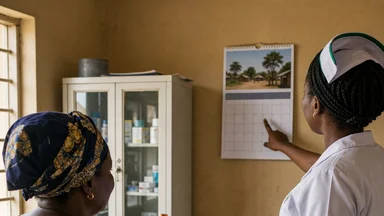
Third, there is no systematic screening protocol for men over 40. The Ministry of Health's guidelines recommend opportunistic screening at every contact, but in practice, nurses focus on the presenting complaint. A man with a cough gets treated for a respiratory infection; his blood pressure is not taken unless he asks. “We are too busy to screen everyone,” admits a nurse at a rural health centre in Thika. “We have to see 80 patients a day. There is no time.”
Fourth, even when hypertension is suspected, confirmatory diagnosis requires repeated measurements on separate visits, which many patients cannot afford in time or transport costs. A 2023 study in the Kenya Medical Journal found that among patients referred for a second blood pressure check, fewer than half returned within a month. The result is that hypertension remains invisible until a catastrophic event forces the issue.
Finally, health workers themselves may lack confidence in managing hypertension. Task-sharing has expanded, but many nurses and clinical officers have had minimal training on antihypertensive protocols. They worry about side effects or drug interactions, so they hesitate to start treatment. The cascade of missed opportunities is well documented: a patient who is screened, diagnosed, and treated is rare in rural settings.
The Cost of Missed Diagnosis in Thika
The consequences of undiagnosed hypertension are not abstract. In Thika County, stroke is now the leading cause of adult disability, according to hospital records. The stroke unit, opened in 2020 with six beds, is constantly full, and patients are often discharged early to make room. Joseph's stroke left him unable to farm, and his wife now sells vegetables in the market to support the family. His monthly medication costs roughly US$ 5, but the family often skips doses to save money.
Kidney failure is another hidden toll. Hypertension is the second most common cause of end-stage renal disease in Kenya, after diabetes. Dialysis costs roughly US$ 60 per session in private centres—an impossible sum for most rural families. Public dialysis units in Thika charge a subsidized rate, but there are only ten machines for a county of over two million people. Many patients simply stop coming.
Heart failure admissions have also increased. A 2024 audit at Thika Level 5 Hospital found that 30% of medical admissions were for heart failure, and over half of those had underlying hypertension that had been diagnosed late or not at all. The average stay is seven days, costing the hospital resources that could be used for other conditions. For families, the loss of income during a hospital stay can push them into debt.
The economic burden extends to the health system. A single stroke admission costs the county government roughly US$ 400—equivalent to the annual per capita health expenditure for two people. Treating hypertension with low-dose combination pills costs less than US$ 30 per year. The arithmetic is clear, but the system is not designed to invest in prevention.
Community Health Workers Bridge the Gap
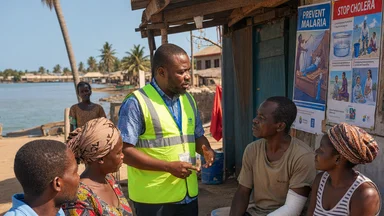
In response to these gaps, pilot programs have deployed community health workers (CHWs) to screen for hypertension in homes. In Kiambu County, a program supported by the Kenyan Ministry of Health and the World Health Organization trained CHWs to use validated automated blood pressure devices. They visit households, measure blood pressure in adults over 40, and refer those with elevated readings to a nearby clinic for confirmation and treatment.
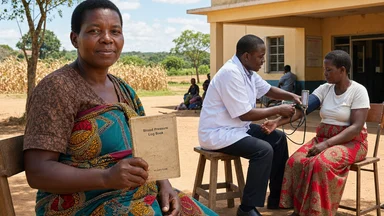
Mary Wanjiku, the CHW in Kiambu, carries a small device in a worn bag. She knows every household in her area and is trusted. When she finds a high reading, she schedules a repeat check for the following week. If the pressure remains high, she accompanies the patient to the clinic and helps them navigate the queue. In her first year, she referred 87 men for hypertension care, and 72 started treatment. “They listen to me because I am from here,” she says.
The pilot data are encouraging. A 2025 evaluation in Kiambu found that CHW-led screening increased hypertension detection by 40% in the first six months, compared with clinics that relied on opportunistic screening alone. Treatment initiation rates also improved, though adherence remains a challenge. The program costs roughly US$ 2 per person screened, including training, devices, and a small stipend for CHWs.
Similar initiatives are underway in other counties, including Thika, where a CHW program is being scaled with funding from the Global Fund. The challenge is sustainability: CHWs are volunteers or receive modest incentives, and turnover is high. Without a formal salary, many leave after a year. Still, the model is being adopted as part of Kenya's community health strategy, which aims to have a CHW for every 100 households.
Simple Interventions That Work
Beyond screening, several simple, low-cost interventions have shown promise in improving hypertension control in rural Kenya. Task-sharing with nurses is one: allowing nurses to initiate and adjust antihypertensive medications without a doctor's approval has been shown to increase treatment rates. In a 2023 randomized trial in Thika, nurse-led hypertension clinics achieved blood pressure control in 60% of patients at six months, compared with 35% in usual care.
Low-dose combination pills, often called “polypills,” simplify treatment by combining two or three drugs in a single tablet. The WHO includes a polypill containing a calcium channel blocker and an ACE inhibitor on its Essential Medicines List. In Kenya, a pilot program in Kiambu distributed polypills at a subsidized cost of roughly US$ 0.10 per tablet. Adherence improved because patients had to remember only one pill instead of three.
Text message reminders have also been effective. A study in the East African Medical Journal found that weekly SMS reminders doubled the odds of medication adherence at three months. The messages are simple: “Remember to take your blood pressure medicine today” in Swahili. The cost is negligible, and the intervention reaches patients who own basic phones.
Home blood pressure monitoring, though less common, is being tested with low-cost devices. In a feasibility study in rural Thika County, patients who were given a simple automated cuff and taught to measure their own pressure had better control at six months than those who relied on clinic visits alone. The devices cost roughly US$ 20 each—a barrier for many families, but a one-time investment that may pay off.
All these interventions share a common thread: they bring care closer to the patient and reduce the burden on overstretched clinics. They are not perfect—adherence still drops off after a few months, and stock-outs of medications occur regularly—but they represent a pragmatic step forward.
Policy Shift Needed for Sustainable Detection
To move from pilots to population-level impact, a policy shift is needed. The Kenyan Ministry of Health has begun scaling the WHO HEARTS technical package, which provides a standardized protocol for hypertension detection and management. The package includes a simple algorithm: measure blood pressure at every visit for adults over 40, confirm with a second reading, and start treatment with a single-pill combination if systolic is above 140 mmHg.
Funding from the Global Fund and other donors is being directed toward training health workers and procuring devices. The target is to screen 80% of adults over 40 in high-burden counties by 2028. But implementation is uneven. In Thika County, only about 20% of dispensaries have a functional automated blood pressure device as of late 2024. Many still rely on manual cuffs that are rarely calibrated.
Another challenge is the supply chain for antihypertensive medications. Public clinics often run out of the most common drugs—amlodipine, enalapril, hydrochlorothiazide—forcing patients to buy them from private pharmacies at higher prices. A 2025 audit in Thika found that stock-outs occurred in 40% of facilities during the previous quarter. Without reliable medication, screening alone is futile.
Training health workers is also a bottleneck. The Ministry of Health has trained over 2,000 nurses and clinical officers in hypertension management through a cascade model, but the quality of training varies. Some clinicians still hesitate to titrate doses or combine drugs. The WHO HEARTS package includes a mentorship component, but mentors are scarce in remote areas.
Despite these hurdles, there is cautious optimism. The combination of CHW screening, task-sharing, and simple treatment protocols has the potential to reduce the burden of undiagnosed hypertension. However, some public health experts caution that donor-dependent programs may not be sustainable in the long term. If external funding ends, the infrastructure for screening and treatment could collapse. A 2024 analysis by the Kenyan Medical Research Institute noted that without integration into county budgets, CHW programs often fade after pilot phases. Balancing donor priorities with local ownership remains an unresolved tension.
What Joseph's Story Teaches Us
Joseph's story is not unique. He represents thousands of rural Kenyan men who develop hypertension in their forties and fifties and never know it until a stroke or heart failure changes their lives. His case illustrates that screening must be routine, not opportunistic. A single blood pressure check during a clinic visit for headache could have caught his condition years earlier.
Device donation alone is not enough. The manual cuff that gave Joseph's first reading was unreliable, and the nurse had no protocol for follow-up. What is needed is a systematic approach: every adult over 40 should have their blood pressure measured at least once a year, with a validated device, and with a clear referral pathway for those with elevated readings. Community health workers like Mary Wanjiku can make that happen, but they need support and compensation.
High blood pressure is fixable. Low-dose combination pills, nurse-led care, and text reminders are not expensive or complex. They are within reach even for a low-income setting like Thika County. The cost of inaction—in strokes, kidney failure, and lost productivity—is far higher. Joseph's family now spends a portion of their income on his care, and he will never farm again. That outcome was preventable.
The lessons from Thika apply beyond Kenya. Across sub-Saharan Africa, hypertension is the leading cardiovascular risk factor, and detection rates are similarly low. The same barriers—lack of devices, overburdened clinics, weak supply chains—are common. The same solutions—CHW screening, task-sharing, simplified treatment—are being tested in Uganda, Ghana, and Malawi. The evidence is building, but the gap between evidence and practice remains wide.
For Joseph, the diagnosis came too late. For the next generation of rural Kenyan men, it does not have to be that way. With sustained effort, the half who are currently undiagnosed could become the half who are treated. Achieving that goal will require not only scaling proven interventions but also addressing the real-world constraints of funding, training, and supply chains that limit their reach. Individual results vary, and screening should always follow local clinical guidelines. That is a concrete challenge, one blood pressure reading at a time.
This article is for informational purposes only and does not constitute personalised medical advice. Individual results vary, and screening should follow local clinical guidelines. Readers should consult their healthcare provider for any health concerns.