In the coastal villages of Ghana's Central Region, a quiet health crisis has been unfolding. Buruli ulcer, a neglected tropical disease caused by Mycobacterium ulcerans, now affects roughly 6.2 people per 1,000 in some communities along the coast. The figure, drawn from a 2024 survey published in PLOS Neglected Tropical Diseases, represents one of the highest documented rates for this bacterial infection. For residents like Akosua Mensah, a 38-year-old farmer from the village of Aboadze, the disease began as a small, painless lump on her forearm—something she dismissed as an insect bite. Months later, the nodule had grown into an open ulcer that required surgery and eight weeks of antibiotics. Her story is far from unique.
A Coastal Village's Hidden Burden
Buruli ulcer is not a new disease in West Africa. The World Health Organization (WHO) has tracked cases across the region for decades, but recent surveys suggest that incidence in coastal Ghana may be higher than previously recognized. The 6.2 per 1,000 figure comes from a cross-sectional study in the Komenda-Edina-Eguafo-Abrem (KEEA) district, an area of lagoons and swamps where the bacteria thrive. Researchers screened over 1,200 residents and found active or healed ulcers in a significant fraction, with many scars indicating past infection.
The disease primarily affects the limbs, starting as a painless subcutaneous nodule that slowly expands. Over weeks to months, the nodule can break down into a characteristic ulcer with undermined edges. Because the lesions are painless, many patients delay seeking care until the ulcer is large or becomes secondarily infected. This delay is a major driver of disability, as advanced Buruli ulcer can lead to permanent joint contractures, limb swelling, and disfigurement.
Children and young adults are disproportionately affected, likely due to their frequent contact with water from ponds and slow-moving rivers where the bacteria are thought to reside. Environmental factors—including deforestation, agricultural runoff, and climate change—may be expanding the bacteria's habitat, bringing it closer to human settlements.
The psychological burden is also substantial. In communities where visible scars carry stigma, patients often hide their ulcers, delaying treatment further. A 2023 study in the Journal of Tropical Medicine found that nearly 40% of patients in endemic areas reported feeling ashamed of their condition, and some avoided social gatherings.
Why the Numbers Are Rising
Several factors likely contribute to the rising case counts. Deforestation and dam construction have altered water drainage patterns, creating stagnant pools that may harbor Mycobacterium ulcerans. Agricultural practices, such as farming near water bodies, increase human exposure. Climate change, with its heavier rainfall and warmer temperatures, may also extend the transmission season.
Surveillance remains patchy. Many rural clinics lack laboratory capacity to confirm Buruli ulcer, relying instead on clinical diagnosis. PCR testing, the gold standard, is available only at district hospitals or reference labs, and transport of samples can take weeks. As a result, reported cases likely underestimate the true burden. The WHO estimates that only about half of all Buruli ulcer cases in West Africa are formally reported.
Another challenge is misdiagnosis. Early nodules can resemble insect bites, boils, or cellulitis. Health workers in remote areas may not have received training on Buruli ulcer, leading to inappropriate treatments like incision and drainage, which can worsen the ulcer. A 2022 audit in Ghana's Central Region found that nearly 30% of confirmed Buruli ulcer patients had initially been treated for something else.
Despite these obstacles, some progress has been made. Ghana's National Buruli Ulcer Control Programme has distributed diagnostic kits to several districts, and community health workers are being trained to recognize early signs. But funding constraints limit the scale of these efforts.
The Patient Journey: Delays and Misdiagnosis
For Akosua Mensah, the journey to diagnosis took four months. She first noticed a small, painless lump on her right forearm while working in her cassava field. A local nurse told her it was an insect bite and gave her antihistamines. When the lump didn't go away, she tried herbal remedies from a traditional healer. Only after the skin broke down into an ulcer did she travel to the district hospital in Elmina, where a health worker suspected Buruli ulcer and sent a swab for PCR confirmation.
The wait for results was three weeks. During that time, the ulcer grew from the size of a coin to nearly 10 centimeters across. Treatment with rifampicin and clarithromycin—the standard WHO-recommended 8-week regimen—was started, but the delay meant she also needed surgical debridement to remove necrotic tissue. The surgery left a large scar, and she lost some range of motion in her wrist.
Akosua is one of the luckier ones. Some patients wait six months or more before getting a correct diagnosis. In a 2023 survey of Buruli ulcer patients in the Western Region, the median time from symptom onset to treatment was 12 weeks. During that period, the bacteria's toxin, mycolactone, destroys tissue and suppresses the immune system, making the ulcer more difficult to treat.
The social cost is also high. Akosua's husband left her shortly after her diagnosis, and she lost income from her farm work. She now depends on her adult daughter for support. "People see the scar and think I have a curse," she said in an interview with local health workers. Stigma remains a powerful barrier to early care.
What the Evidence Says About Treatment
The standard treatment for Buruli ulcer is an 8-week course of oral antibiotics: rifampicin combined with clarithromycin or moxifloxacin. This regimen, recommended by the WHO since 2004, has transformed outcomes. Before antibiotics, surgery was the only option, often requiring extensive excision and skin grafts. Now, with early treatment, healing rates exceed 90% and surgery can often be avoided.
But adherence is a challenge. The antibiotics can cause nausea, abdominal pain, and, in the case of rifampicin, orange discoloration of urine and tears. Patients must take them daily for two months, a long course for a painless condition. Some stop early once the ulcer begins to heal, risking relapse. A 2021 study in Ghana found that roughly 15% of patients did not complete the full regimen.
Antibiotic resistance remains rare but has been documented. In 2019, a case of rifampicin-resistant M. ulcerans was reported in a patient from Benin who had received incomplete treatment. Surveillance for resistance is limited in many endemic areas, and there is no routine susceptibility testing. The WHO has called for increased monitoring.
No vaccine is currently available for Buruli ulcer. The BCG vaccine, used for tuberculosis, offers some partial protection in children but wanes over time. Research into a specific vaccine is ongoing, with several candidates in preclinical development, but funding is scarce.
Closing the Access Gap in Rural Ghana
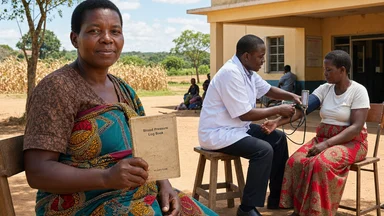
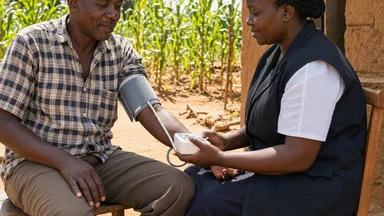
Efforts to bring diagnosis and treatment closer to patients are underway. The Ghana Health Service, with support from the WHO and NGOs like Anesvad, has trained community health workers in endemic districts to recognize early signs of Buruli ulcer. These workers use mobile phones to report suspected cases to district health teams, who can then arrange for sample collection and PCR confirmation.
Free antibiotics are provided through Ghana's National Buruli Ulcer Control Programme, funded largely by international donors. But distribution is uneven. Remote villages may run out of stock, and patients often have to travel long distances to pick up medications. A 2024 assessment found that drug stockouts occurred in about 20% of health facilities in high-burden districts.
Surgical camps, held periodically in district hospitals, offer debridement and skin grafting for advanced cases. These camps are staffed by visiting surgeons and can treat dozens of patients in a few days. But they are not a permanent solution. Many patients still face long waits for surgery, and postoperative care is often inadequate.
Risk communication is another key strategy. Health educators go to villages to explain that Buruli ulcer is not a curse but a treatable bacterial infection. They use local languages like Fante and Twi, and rely on community leaders to spread the message. A 2023 study in the KEEA district found that awareness campaigns increased the proportion of patients seeking care within the first month of symptoms from 15% to 30%.
Lessons for Other Endemic Regions
Ghana's experience offers lessons for other countries where Buruli ulcer is endemic, such as Cameroon, Benin, and Côte d'Ivoire. Integration into primary care is essential. Rather than relying on vertical programs, training general health workers to suspect Buruli ulcer can reduce delays. Simple clinical algorithms, combined with access to PCR, can improve diagnostic accuracy.
Environmental control measures—such as filling stagnant pools, improving drainage, and providing safe water sources—may reduce transmission, though evidence is limited. A pilot project in Benin that involved clearing vegetation around water bodies led to a 40% drop in new cases over three years, according to a 2022 report.
Surveillance data drives resource allocation. Countries that invest in regular mapping of cases can target interventions more effectively. But global funding for Buruli ulcer remains insufficient. The WHO's roadmap for neglected tropical diseases calls for increased investment, but the disease often falls behind better-known conditions like lymphatic filariasis or onchocerciasis.
As climate change reshapes the environment, the geographic range of M. ulcerans may expand. Cases have already been reported in new areas of Ghana and neighboring countries. Without sustained efforts, the burden could grow.
Trade-offs in Intervention Strategies
Choosing where to invest limited resources involves trade-offs. For instance, funding mobile diagnostic units can reduce time to diagnosis but is costly per patient reached. In contrast, training community health workers is cheaper but may yield lower diagnostic accuracy. A cost-effectiveness analysis published in 2023 in BMC Public Health compared two strategies in Ghana: scaling up community health worker training versus establishing more PCR testing hubs. The study found that the training strategy was more cost-effective in the short term, reducing delays by an average of 2 weeks at a cost of $12 per disability-adjusted life year (DALY) averted, while the PCR hub strategy cost $45 per DALY averted but offered higher accuracy. However, the hub strategy required substantial upfront infrastructure investment. Policymakers must weigh these trade-offs based on local epidemiology and budget.
Another trade-off involves antibiotic distribution. Providing free antibiotics at rural clinics improves access but risks stockouts if demand is unpredictable. A central pharmacy model ensures supply but requires patients to travel longer distances. A hybrid model—where antibiotics are stocked at selected clinics and replenished based on real-time data—may balance these concerns. Ghana's National Buruli Ulcer Control Programme is piloting such a system in three districts, with results expected in 2025.
Furthermore, there is debate about the optimal duration of antibiotic therapy. While the standard 8-week regimen is effective, some researchers argue that a shorter 4-week course could improve adherence and reduce side effects, especially for early-stage lesions. A clinical trial in Benin, published in 2022 in The Lancet Infectious Diseases, found that a 4-week regimen of rifampicin and clarithromycin achieved healing in 85% of patients with small nodules, compared to 92% for the standard 8-week course. The difference was not statistically significant, but the trial was underpowered. Longer follow-up is needed to confirm non-inferiority. If shorter regimens prove effective, they could significantly reduce the burden on health systems and patients.
Counter-Arguments: Is Active Case Finding Worth It?
Some public health experts question the value of active case finding for Buruli ulcer, given its low prevalence compared to other diseases like malaria or tuberculosis. They argue that resources might be better spent on integrated disease surveillance rather than vertical campaigns. For example, screening entire villages for Buruli ulcer can be logistically challenging and may yield few new cases per person screened. In the KEEA district survey, only 6.2 per 1,000 had active ulcers, meaning over 993 people were screened for each case detected. Critics contend that such efforts divert time and money from more common conditions.
Proponents counter that early detection prevents severe disability, which is costly to treat and has lifelong consequences. The cost of treating a single advanced Buruli ulcer case—including surgery, hospitalization, and rehabilitation—can exceed $1,000, while early antibiotic treatment costs less than $50. Thus, active case finding may be cost-saving from a societal perspective. A 2021 modeling study in Ghana estimated that every $1 invested in community-based screening saved $3.50 in treatment costs over five years. However, these savings depend on high coverage and prompt referral, which are not always achieved.
Another counter-argument concerns stigma. Some community members may resist screening due to fear of diagnosis and social exclusion. Health workers must navigate these sensitivities carefully. In a pilot program in the Western Region, community engagement sessions were held before screening, and local leaders were trained to address misconceptions. This approach led to higher participation rates and fewer refusals. Still, stigma remains a barrier that active case finding must actively mitigate.
Future Directions and Innovations
New diagnostic tools are on the horizon. Loop-mediated isothermal amplification (LAMP) assays can detect M. ulcerans DNA in less than an hour without expensive equipment. Field trials in Ghana and Cameroon have shown sensitivity above 90% compared to PCR. If LAMP kits become widely available, they could be deployed at rural clinics, reducing diagnostic delays from weeks to hours. The WHO is currently evaluating LAMP for inclusion in its essential diagnostics list.
Drug development is also progressing. A new antibiotic candidate, bedaquiline, which is used for multidrug-resistant tuberculosis, has shown activity against M. ulcerans in laboratory studies. A phase 2 trial in Benin is testing bedaquiline combined with rifampicin as a potential 4-week regimen. If successful, this could offer a shorter, more tolerable treatment. However, bedaquiline is expensive and not yet approved for Buruli ulcer.
Community-based care models are being refined. In some districts, trained volunteers administer the first month of antibiotics at home, reducing travel burden. A 2023 pilot in the Central Region found that home-based treatment achieved completion rates of 88%, compared to 72% for facility-based care. However, volunteers need ongoing supervision to ensure correct dosing and monitoring for side effects.
Finally, integrating Buruli ulcer control into broader neglected tropical disease programs could improve efficiency. For example, combining Buruli ulcer screening with mass drug administration for lymphatic filariasis or onchocerciasis could reach more people at lower cost. A feasibility study in Côte d'Ivoire is testing this integrated approach, with results expected in 2025.
This article is for informational purposes only and does not constitute medical advice. Readers should consult a health professional for any health concerns or before making any decisions related to their health or treatment.