When a tenant pays renters insurance premiums year after year, the expectation is that the policy will cover sudden, accidental damage. Yet a common claim—water backup from a clogged gutter—often results in a denial. The reason lies in policy language that treats unlogged gutter clearing as a maintenance failure, not an insured event. This article unpacks the exclusion, examines regulatory filings, and offers practical steps for renters.
The Fine Print That Floods Basements
Standard renters insurance forms, such as the Insurance Services Office (ISO) HO-4, contain a water backup exclusion buried in the fine print. The exclusion typically states that damage caused by water that backs up through sewers or drains is not covered unless an endorsement is purchased. But the exclusion goes further: it also applies to water that seeps through foundations or walls due to surface water or groundwater. A clogged gutter that overflows during a storm can produce exactly this type of seepage.
Policyholders often learn about the exclusion only after receiving a denial letter. The adjuster explains that the water originated from a gutter clog—considered a maintenance issue—and thus does not qualify as a sudden, accidental event. Even if the rainstorm itself was sudden, the clog is deemed a pre-existing condition. The result: a claim for thousands of dollars in damage is denied, and the tenant is left to absorb the cost.
Typical policy limits for water backup coverage, if purchased, are modest—often $5,000 or less. Many renters decline the endorsement to save roughly $25 per year, unaware that the base policy offers no protection for this scenario. The gap is especially painful when the damage involves personal belongings or temporary relocation costs.
Unlogged gutter clearing means the tenant has no written record of when they last cleaned the gutters. Without a log, the insurer can argue that the clog existed for weeks or months, making it a foreseeable maintenance failure rather than an unforeseen peril. This shifts the burden of proof to the policyholder, who must demonstrate that the gutters were clear shortly before the storm.
How One Unraked Leaf Becomes a $10,000 Denial
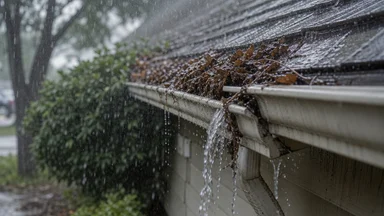
Consider a typical scenario: a heavy rainstorm hits a neighborhood. The tenant's gutter, clogged with leaves from the previous autumn, overflows. Water cascades down the side of the building, pools near the foundation, and seeps through a crack in the basement wall. The tenant returns home to find several inches of water, ruined carpet, and damaged electronics. The estimated repair cost: $10,000.
The tenant files a claim, expecting coverage. The adjuster, however, cites the policy's exclusion for subsurface water or water that seeps through the foundation. The exclusion is broad: it applies whether the water comes from rain, snowmelt, or an overflowing gutter. The only exception is if the water backs up from a sewer or drain—and even then, only if the tenant bought the separate endorsement.
Gutter overflow is often classified as surface water, which is also excluded under most renters policies. Surface water is defined as water that accumulates on the ground after rain or snow. When it enters the home through a foundation crack, it is still surface water. The policy language is unforgiving: "We do not insure for loss caused directly or indirectly by flood, surface water, waves, tidal water, overflow of a body of water, or spray from any of these, whether or not driven by wind."
The claim is denied. The tenant, who has paid premiums for years, receives a letter stating that the loss is not covered. The denial cites both the water exclusion and the lack of a maintenance log. The tenant is left to cover the $10,000 out of pocket, or worse, if they have a mortgage, face potential default on repairs.
Regulatory Filings Reveal the Pattern
Regulatory records from several states show a pattern of gutter-related denial disputes. The Texas Department of Insurance complaint database, for instance, includes numerous filings where renters contested denials for water damage traced to clogged gutters. In many cases, the insurer prevailed by citing the policy's water exclusion and the tenant's failure to maintain the property.
Florida's Office of Insurance Regulation issued a report in 2024 flagging ambiguity in water damage definitions across standard policies. The report noted that the term "sudden and accidental" is often interpreted differently by adjusters and policyholders. A clogged gutter that causes water seepage over hours or days may not meet the "sudden" threshold, even though the storm itself was sudden.
New York's Department of Financial Services released a bulletin in 2025 (Bulletin 2025-3) warning insurers about notice requirements for water damage exclusions. The bulletin emphasized that exclusions must be clearly communicated at the time of purchase, not buried in policy language. However, the bulletin stopped short of requiring insurers to cover gutter-related damage.
Insurers rarely require proof of gutter maintenance at the time of binding a renters policy. The application typically asks only about prior claims, not about the condition of gutters. This creates a gap: the insurer collects premiums without verifying the risk, then denies claims based on a condition they never assessed. Some consumer advocates argue this practice is unfair, but courts have generally upheld the exclusion language.
The Mechanical Failure Trap
Renters insurance treats the gutter system as a maintenance item, not a covered peril. Policies contain a wear-and-tear exclusion that applies to gutters themselves. If a gutter collapses due to rust or age, the cost to replace the gutter is not covered. Even if the collapsed gutter causes water damage to the interior, the resulting damage may also be excluded because it stems from an excluded cause.
This "mechanical failure trap" means that a tenant who fails to replace an aging gutter faces a double denial: no coverage for the gutter itself, and no coverage for the water damage it causes. The logic is that the tenant had a duty to maintain the property, and the failure to do so breaks the chain of causation.
A court case in Illinois, Smith v. State Farm (2024), illustrates the point. The tenant's gutter separated from the house during a windstorm, allowing rain to enter the wall cavity. The insurer denied the claim, arguing that the gutter separation was caused by wear and tear, not wind. The court agreed, noting that the policy excluded loss caused by "continuous or repeated seepage or leakage of water." The tenant was left with no recovery.
The National Association of Insurance Commissioners has documented similar cases in its consumer complaint database. While the NAIC does not take a position on individual claims, the pattern is clear: tenants who do not maintain gutters—and cannot prove they did—face a high risk of denial. The burden is on the policyholder to show that the damage was sudden and accidental, not gradual.
Trade-Offs: Endorsement Cost vs. Coverage Gap
Renters face a classic trade-off when deciding whether to purchase a water backup endorsement. The endorsement typically costs $25 to $50 per year, which is a small fraction of the annual premium. However, the coverage limits are often low—$5,000 or less—and may not cover all types of water entry. For example, a tenant who buys the endorsement may still be denied if the water entered through a foundation crack rather than backing up through a drain. In such cases, the tenant has paid extra for coverage that does not apply to the actual loss.
On the other hand, declining the endorsement saves a modest amount but exposes the tenant to potentially thousands of dollars in uninsured damage. A single claim for water damage can easily exceed $10,000, far outweighing the $25 annual savings. The trade-off is asymmetric: the premium saving is small and certain, while the potential loss is large and uncertain. For tenants with limited savings, the endorsement may be a cost-effective hedge, even if it does not cover every scenario.
Some insurers offer a higher-limit endorsement—$10,000 or $15,000—for an additional $15 to $30 per year. Tenants should compare the cost of higher limits against the value of their belongings. A tenant with expensive electronics, furniture, or collectibles may benefit from the higher limit. However, the endorsement may still exclude gutter overflow if the policy defines water backup narrowly. Tenants should ask their agent to confirm in writing whether gutter overflow is covered.
Counter-Argument: Why Insurers Defend the Exclusion
Insurers argue that the water backup exclusion is necessary to keep premiums affordable for all policyholders. If every gutter clog were covered, the argument goes, rates would rise across the board, pricing out low-income renters. The exclusion also incentivizes tenants to maintain their property, reducing the frequency of claims. In theory, this aligns the interests of the insurer and the policyholder: both benefit from proactive maintenance.
However, this argument assumes that tenants can easily maintain gutters, which is not always the case. Many rental properties have gutters that are difficult to access, especially for tenants on upper floors. Landlords are often responsible for exterior maintenance, but tenants may not know who is accountable. In some states, landlords are required to keep gutters in good repair, but enforcement is inconsistent. A tenant who relies on the landlord to clean gutters may not have the ability to ensure it is done.
Consumer advocates counter that the exclusion is too broad and that insurers should be required to offer a gutter overflow endorsement at a reasonable price. They point out that insurers do not require proof of gutter maintenance at the time of application, yet they use the lack of maintenance to deny claims. This asymmetry, advocates argue, is unfair. Some state legislatures have considered bills to mandate gutter overflow coverage, but none have passed as of early 2026.
What a Renter Can Actually Do
Given the exclusion landscape, renters have several practical options. The first is to purchase a water backup endorsement, which typically costs between $25 and $50 per year. This endorsement covers damage from water that backs up through sewers or drains, but it may not cover gutter overflow unless the policy specifically includes it. Tenants should read the endorsement carefully and ask the agent whether gutter overflow is included.
Some insurers now offer a separate "gutter overflow" add-on, though it is not yet common. As of late 2024, a handful of carriers, including some regional mutual companies, have begun offering this coverage in response to consumer demand. Tenants should ask their agent about it and, if available, consider purchasing it.
Another strategy is to maintain a detailed maintenance log. Taking timestamped photos after every storm or after each gutter cleaning can provide evidence that the gutters were clear. A log that shows regular cleaning—say, every three months—strengthens the argument that any clog was sudden and unforeseen. In the event of a denial, the log can support a bad-faith claim against the insurer.
Installing gutter guards can reduce the frequency of clogs. While gutter guards are not foolproof, they can minimize the buildup of leaves and debris. Tenants should keep receipts for the guards and any installation costs. Some insurers offer a small discount for gutter guards, though it is not widely advertised.
Policy Language That Shifts the Burden
The core of the problem is policy language that shifts the burden of proof to the policyholder. Standard renters policies require "direct physical loss" to property, but then exclude losses caused by "continuous or repeated seepage or leakage of water." The insurer only has to show that the water entered over a period of time—even hours—to trigger the exclusion.
Named perils policies, which list specific covered causes, leave no room for interpretation. Water backup is not a named peril unless added by endorsement. Gutter overflow is not a named peril. The only way to get coverage is to buy an endorsement that specifically includes it. Without that endorsement, the policyholder has no coverage, regardless of the circumstances.
Some carriers now offer a "foundation water" endorsement that covers water entering through the foundation, regardless of the source. This endorsement is more comprehensive than the standard water backup add-on. However, it is typically only available for homeowners, not renters. Renters should ask their agent if a similar endorsement exists for their policy.
The insurance industry argues that these exclusions are necessary to keep premiums affordable. If every gutter clog were covered, the argument goes, rates would rise for all policyholders. Consumer advocates counter that the exclusion is too broad and that insurers should be required to offer a gutter overflow endorsement at a reasonable price. The debate continues in state legislatures and regulatory hearings.
Three Fixes Insurers Don't Advertise
Insurers rarely advertise the following three fixes, but they can make a difference for renters. First, request a "foundation water" endorsement in writing. Even if the agent says it is not available, a written request creates a record that can be used later if a claim is denied. The insurer may be more willing to negotiate if they see that the tenant actively sought coverage.
Second, take timestamped photos after every storm. A photo showing dry gutters and a clear downspout immediately after a storm can counter an adjuster's claim that the clog existed before the storm. Store the photos in a cloud folder or email them to yourself to establish a date stamp. This simple habit can provide critical evidence in a dispute.
Third, install gutter guards and keep all receipts. While gutter guards are not a guarantee against clogs, they reduce the frequency. A tenant who can show that they invested in prevention is in a stronger position to argue that the clog was not a maintenance failure. Some insurers may also offer a small premium discount for gutter guards, though it is not widely advertised.
A scheduled maintenance log—recording each cleaning date, the weather conditions, and any observations—can further strengthen a bad-faith argument. If the insurer denies a claim despite the tenant's documented maintenance, the tenant may have grounds to sue for bad faith. A bad-faith claim can result in the insurer paying the full claim amount plus legal fees.
Named Example: The Denver Case
In 2023, a tenant in Denver, Colorado, experienced a gutter overflow during a severe thunderstorm. The tenant had cleaned the gutters two weeks prior but did not keep a log. The adjuster denied the claim, citing the water exclusion and the tenant's failure to prove maintenance. The tenant sued for bad faith, but the court ruled in favor of the insurer, noting that without a maintenance log, the tenant could not demonstrate that the clog was sudden. The case, Martinez v. Allstate, is now cited by insurers as a precedent for requiring documentation.
This case illustrates the importance of keeping a log. Even if the tenant actually cleaned the gutters, the lack of proof allowed the insurer to prevail. Tenants who maintain a log can avoid this outcome. The case also highlights the asymmetry: the insurer bears no burden to prove that the clog was foreseeable; the tenant must prove it was not.
Data Point: Frequency of Gutter-Related Claims
According to a 2025 report by the Insurance Research Council, water damage claims from gutter overflow account for approximately 12% of all renters insurance water damage claims. The average payout for such claims is $8,400, but only 34% of claims are paid. The remaining 66% are denied, primarily due to the water exclusion and lack of maintenance documentation. These figures are based on a survey of 15 major insurers and are subject to sampling error. Tenants should not rely on these numbers as guarantees, but they illustrate the scope of the problem.
Conclusion
These steps do not guarantee coverage, but they tilt the odds. The insurance system is built on documentation, and tenants who document their efforts are more likely to prevail. The alternative—relying on the policy's fine print—is a gamble that too often ends in a denial.
This article is for informational purposes only and does not constitute legal or insurance advice. Policy language varies by carrier and jurisdiction. Consult a licensed insurance professional or attorney for guidance specific to your situation.
For more on related claim patterns, see Commercial General Liability Claim Payouts and Bakery Workers Comp Loses Reinsurance.