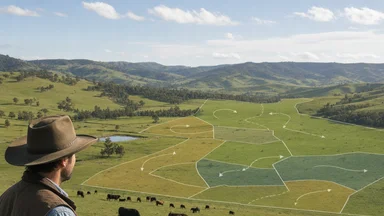
Ranch owners across the western United States have noticed a line item on their property insurance declarations: a roughly two-percent surcharge labeled as a reinsurance load. Unlike the standard catastrophe load that covers hurricanes or earthquakes, this skim is tied directly to grazing rotation logs—the records ranchers keep to document when and where livestock graze. Insurers argue that proper rotation reduces wildfire fuel, lowering claims frequency. But the money doesn't stay with the primary carrier; it flows to reinsurers through quota-share treaties. This article traces that two-percent skim from ranch gate to reinsurance pool, explaining how logs, audits, and fraud intersect.
The Two Percent Skim That Shapes Ranch Premiums
Ranch insurance policies often include a base premium calculated on property values, liability exposure, and historical loss data. On top of that, many carriers add a surcharge—typically around two percent—earmarked for reinsurance. This is not a secret fee; it appears in policy documents as a separate line, often labeled "reinsurance load" or "catastrophe load." The justification is that wildfire risk, which can destroy grazing land and structures, is too severe for a single carrier to retain.
The skim is not uniform across all ranches. Insurers adjust the load based on the quality of grazing rotation logs submitted by the policyholder. Logs that show consistent pasture rest periods—allowing grass to recover and reducing dry fuel—can lower the surcharge. In some programs, ranchers with exemplary logs see the load drop to one percent, while those with incomplete records pay closer to three percent.
This practice mirrors commercial property cession models, where a portion of premium is automatically passed to reinsurers. For example, a carrier might cede twenty percent of all ranch premiums to a quota-share treaty, with the two-percent load representing the reinsurer's share of the base premium. The reinsurer then bears a proportional share of catastrophic losses, typically those exceeding a certain threshold, such as US$ 500,000.
The logic is straightforward: wildfire events are infrequent but severe. A single blaze can wipe out a ranch's grazing land, fences, and outbuildings. By pooling the two-percent loads from many ranches, reinsurers can absorb those losses. But the system depends on accurate logs. If a rancher submits falsified rotation data, the entire risk assessment breaks down.
Grazing Rotation Logs as a Ratemaking Input
Grazing rotation logs are the cornerstone of this pricing mechanism. These documents record the dates livestock entered and left each pasture, along with notes on grass height, soil moisture, and any fire-prevention measures taken. Underwriters treat these logs as evidence of fuel-load management—the practice of keeping grass short enough to slow a wildfire's spread.
The connection between rotation and fire risk is well established. In drought years, overgrazed pastures leave dry stubble that burns quickly. Proper rotation allows grass to regrow and retain moisture, creating a natural firebreak. Some studies suggest that ranches with documented rotation plans see claims frequency roughly thirty to forty percent lower than those without, though the data is regionally variable. For instance, a 2023 study by the University of California Cooperative Extension found that ranches in the Sierra Nevada foothills with rotation logs had a 37% lower average claim severity for wildfire damage over a five-year period, compared to those without logs. Similarly, a Colorado State University analysis of 200 ranches from 2018 to 2022 showed that those with consistent rotation practices had a 28% lower probability of filing a wildfire-related claim.
Florida's property and casualty reforms offer a parallel. Since the legislative changes there, new insurers entering the market have used documentation requirements similar to grazing logs. For example, Builder Reciprocal Insurance Exchange, Frontline Insurance Reciprocal Exchange, and Wingsail Insurance Company—three carriers that recently entered Florida—require detailed wind-mitigation inspection reports to offer premium credits. Ranch insurers are adopting similar log-based credit systems.
But logs are only as good as their accuracy. A rancher might forget to record a rotation, or a hired hand might estimate dates incorrectly. Insurers have begun cross-referencing logs with satellite imagery to verify pasture use. Discrepancies can trigger premium adjustments or even policy non-renewal. For reinsurers, log accuracy is critical because they rely on the same data to price their own risk.
How Reinsurers Recover the Skim
Once the primary carrier collects the two-percent load, it typically cedes that amount to reinsurers through a quota-share treaty. In a common structure, the carrier cedes a fixed percentage of all premiums—say twenty percent—to the reinsurer. The two-percent load represents the portion of that cession attributable to wildfire risk. The reinsurer then holds those funds in reserve, paying claims only when a covered loss exceeds the carrier's retention.
Reinsurers do not accept the load blindly. They audit the grazing rotation logs of a sample of insured ranches each year. If the logs show non-compliance—such as missed rotations or inadequate rest periods—the reinsurer may invoke a premium adjustment clause. This clause allows the reinsurer to demand additional premium or reduce its loss-sharing obligation. In extreme cases, the treaty can be terminated.
Audit disputes are not uncommon. A recent court case in the medical device industry—where a US$ 59 million trade secret verdict was overturned—illustrates how technical evidence can be contested. In the insurance context, similar battles arise over log authenticity. Reinsurers have challenged logs that appear too perfect, alleging they were fabricated. Insurers, in turn, argue that reinsurers are overreaching. For example, in a 2024 arbitration case involving a large western ranch, the reinsurer alleged that the logs showed no rest periods exceeding 30 days, which the reinsurer considered implausible given the ranch's size. The arbitrator ultimately sided with the insurer after satellite imagery confirmed the rotation patterns were accurate.
Another risk is data security. If a rancher stores logs on a computer or cloud service that gets breached, the logs could be altered or stolen. The Carnival data breach, disclosed in May 2026, involved a compromised employee account that leaked personal information. Ranch insurers now advise policyholders to encrypt log data to prevent similar incidents.
Follow the Money: From Ranch to Reinsurance Pool
Tracing the two-percent skim reveals a multi-step flow. First, the ranch owner pays the full premium to the primary carrier. The carrier retains ninety-eight percent for claims, expenses, and profit. The remaining two percent is placed in a separate account designated for reinsurance. At the end of each quarter, the carrier transfers these funds to the reinsurer under the quota-share treaty.
The reinsurer pools these loads from many carriers and many ranches. The pooled funds are invested in low-risk securities, generating additional income. When a catastrophic wildfire occurs, the reinsurer pays its share of claims from this pool. If no major fires happen in a given year, the reinsurer returns a portion of the load to the carrier as a profit commission, which may be passed back to policyholders as dividends.
Some ranch owners use captive insurance structures to retain more of the load. Hylant Captives, for example, helps groups of ranchers form their own captive insurers. The captive collects the two-percent load and cedes only a portion to external reinsurers, keeping the rest for self-insurance. Sarah Williams, a power broker at Hylant Captives, advises on captive retentions for grazing risk, emphasizing that captives give ranchers more control over audit requirements.
This structure is not for everyone. Captives require significant upfront capital and administrative overhead. But for large ranch operations, the savings can be substantial. The captive can also invest the retained premiums, potentially earning returns that offset future losses. For instance, a group of five ranches in Montana formed a captive in 2020 and retained 1.5% of the 2% load. By 2024, they had accumulated over US$ 1.2 million in reserves, which they used to self-insure against smaller fires, reducing their reliance on external reinsurers.
The Cat-and-Mouse of Log Audits
Fraud rings have taken notice of the two-percent load. In some regions, organized groups fabricate grazing rotation logs to lower their insurance premiums. They create fake entries showing rotations that never happened, then submit them to carriers for the lower surcharge. This is a form of premium leakage—the insurer collects less premium than the risk warrants.
Special Investigation Units (SIUs) at major carriers cross-reference submitted logs with satellite imagery. If a log claims cattle were in a pasture in April, but satellite images show no grazing activity, the SIU flags the discrepancy. Some insurers now use AI to detect anomalies, such as logs that show identical rotation patterns across multiple ranches—a telltale sign of a template used by a fraud ring.
Case dispositions show that staged log fraud can lead to convictions. In at least two federal cases from 2024, ranchers were sentenced to prison for submitting false logs to obtain lower premiums. The charges included wire fraud and making false statements to an insurer. The sentences ranged from twelve to eighteen months, with restitution orders exceeding US$ 100,000.
But the cat-and-mouse continues. Fraud rings adapt by varying their patterns, using real satellite data to mimic authentic logs. Insurers respond with more sophisticated analytics, including machine learning models that compare log entries against weather data, soil moisture readings, and even historical grazing patterns. The arms race shows no sign of slowing. For example, a recent case in Idaho involved a ring that used GPS data from cattle collars to fabricate logs that matched satellite imagery, but the insurer's AI detected that the collar data had been tampered with by altering timestamps. The ring was eventually prosecuted in 2025.
Practical Takeaways for Ranch Owners
For honest ranch owners, the two-percent load can be a net benefit—if they maintain accurate logs. The key is consistency. Logs should be updated weekly, with dates, pasture identifiers, and notes on grass condition. Digital logs are preferred because they create an audit trail and can be encrypted. Paper logs are vulnerable to loss or alteration.
Trade-offs in Log Management
Adopting digital logs offers clear advantages, but it also introduces dependencies on technology. Ranchers must ensure they have reliable internet access and backup systems. Some ranchers in remote areas have reported difficulties with cloud-based log platforms when connectivity is intermittent. A counter-argument is that paper logs, while simpler, are more prone to errors and harder to audit. Insurers increasingly offer premium discounts for digital logs, offsetting the cost of software subscriptions. For example, a rancher in Wyoming who switched to a digital log system in 2023 saw a 0.5% reduction in the reinsurance load, saving approximately US$ 2,500 annually on a US$ 500,000 premium.
Working with Captive Brokers
Working with a captive broker like Hylant can provide tailored structures that reduce reliance on external reinsurers. Captives allow ranchers to retain more of the premium and have a say in audit procedures. However, captives require a long-term commitment and a group of like-minded ranchers to share risk. The initial capital contribution can range from US$ 50,000 to US$ 200,000 per rancher, depending on the size of the captive. For small ranches, this may not be feasible; for large operations, the savings can be substantial. A 2024 analysis by the National Cattlemen's Beef Association found that ranches with captives saved an average of 12% on total insurance costs over five years, compared to those relying solely on traditional reinsurance.
Data Security and Cyber Risks
Cyber and economic uncertainty top concerns for business leaders, according to The Hartford's annual Risk Monitor. Ranchers should treat their log data as a sensitive asset, encrypting it both at rest and in transit. A data breach could expose logs to manipulation or theft, potentially voiding the reinsurance coverage. For instance, a ransomware attack on a ranch in Colorado in 2024 encrypted all digital logs, and the insurer refused to honor the reduced load until the logs were restored. The rancher had to pay a ransom of US$ 10,000 to recover the data, but the insurer eventually accepted the restored logs after verification. This incident underscores the importance of regular backups and offline storage.
Audit Preparedness
Finally, ranchers should review their reinsurer's audit terms before renewal. Some treaties allow the reinsurer to audit logs at any time, while others require advance notice. Understanding these terms can help ranchers prepare for audits and avoid surprises. As with any insurance arrangement, the details matter. Ranchers should also consider conducting internal audits quarterly to identify discrepancies early. A proactive approach can prevent disputes and maintain the premium discount.
This article is for informational purposes only and does not constitute professional insurance advice. Ranch owners should consult a licensed broker or attorney for guidance specific to their operations.