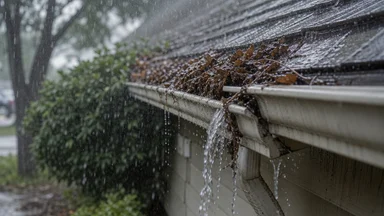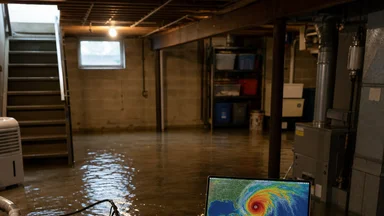
A failed sump pump in a finished basement can turn a routine water backup into a $40,000 total loss. For homeowners insurers, these claims are not just a nuisance — they are a bellwether for hurricane severity and a key input in reinsurance recovery modeling. After a Category 3 storm makes landfall, loss ratios on sump pump endorsements can spike by 20 percentage points, prompting primary carriers to adjust retentions and reinsurers to reprice their catastrophe layers. This article traces the premium flow from a single sump pump claim through the reinsurance chain, showing how hurricane category acts as a pricing toggle.
Sump Pump Claims: The $40K Loss That Reshapes Premium
The average sump pump failure claim falls in the $4,000 to $10,000 range, but high-value homes with finished basements can see totals exceeding $40,000 when water damage ruins flooring, drywall, and personal property. In coastal states like Florida, where basement flood risk is often underestimated, these claims concentrate after major hurricanes. After a Category 3 event, sump pump claim frequency can triple, pushing the loss ratio for the water backup endorsement from a manageable 40% to over 60%. For example, after Hurricane Ian in 2022, Florida insurers reported a 250% increase in sump pump claims in affected counties, with average claim severity rising 30% due to extended power outages that rendered pumps useless. This pattern repeated after Hurricane Idalia in 2023, where sump pump failures accounted for 12% of all water-related claims, up from 5% in non-hurricane years.
Primary carriers track these claims closely because they erode the profitability of the entire homeowners line. In Florida, some insurers have added a 15% surcharge on policies with sump pump endorsements following the 2025 hurricane season, according to industry filings. The surcharge reflects the updated loss cost — the expected claim amount per $100 of coverage — which actuaries recalculate after each major storm. A counter-argument from consumer advocates is that surcharges penalize all policyholders in a region, even those whose sump pumps functioned properly. However, insurers argue that geographic risk pooling is necessary because any home with a basement is vulnerable during a hurricane, regardless of maintenance. This tension between individual equity and collective risk sharing is a recurring theme in rate hearings.
Reinsurers are even more sensitive to sump pump losses because they often attach after a primary carrier's retention is exhausted. A single large loss from a sump pump failure in a high-value home can push a primary carrier into its reinsurance layer, triggering a recovery that shifts the cost from the carrier's balance sheet to the reinsurer. This dynamic makes sump pump claims a critical input in catastrophe models. For instance, a $2 million home in Naples, Florida, with a finished basement and a single sump pump, could generate a $150,000 claim if the pump fails during a hurricane. If the primary carrier's retention is $1 million per occurrence, that single claim plus others from the same storm could easily breach the attachment point, leading to a reinsurance recovery that multiplies the impact on pricing.
How Reinsurance Recovery Chains Shift the Cost
Primary carriers typically cede 50% or more of their sump pump exposure to reinsurers through quota share treaties or excess of loss agreements. The reinsurer pays once the ground-up loss exceeds an attachment point, which for a typical homeowners program might be $250,000 per occurrence. After a hurricane, multiple sump pump claims can aggregate to exhaust the primary carrier's retention quickly. For example, a single subdivision with 50 homes each filing a $10,000 sump pump claim would generate $500,000 in ground-up losses, easily surpassing a $250,000 retention and triggering reinsurance recovery for the excess.
The distinction between wind-driven rain and storm surge is crucial for recovery splits. Wind-driven rain that seeps through a roof and causes sump pump overload is usually covered under the standard homeowners policy, while storm surge flooding falls under a separate flood policy. Private flood insurers, which have grown rapidly since the NFIP's reforms, now write sump pump coverage that fills gaps left by the federal program. Convex Group's new Lloyd's syndicate 1987, which received approval in May 2026, targets long-tail water damage, including sump pump claims, as part of its specialty offering. This entry adds capacity but also introduces complexity, as primary carriers must now navigate multiple reinsurers with differing definitions of covered perils. A trade-off exists: more capacity can lower reinsurance premiums, but it also increases administrative costs and potential disputes over claim categorization.
Reinsurers model sump pump claims as a sub-peril within hurricane catastrophe models. RMS and AIR update their frequency curves roughly every 18 months, incorporating new data from recent seasons. The attachment point for a typical reinsurance treaty might be set at a return period of 1-in-5 years for a Cat 3 storm, but after a Cat 4, the same treaty may attach at a 1-in-2 year level, increasing the likelihood of recovery. This dynamic was evident after the 2024 hurricane season, where three Cat 3+ storms made landfall in Florida, causing reinsurers to revise their frequency assumptions upward by 15% for the Cat 3 bucket. Primary carriers responded by increasing their retentions from $250,000 to $500,000 per occurrence to avoid frequent reinsurance triggers, a move that shifted more risk back onto their own balance sheets.
Hurricane Category as a Pricing Toggle
Not all hurricanes produce sump pump claims equally. Category 1 and 2 storms typically bring wind-driven rain that can overwhelm drainage systems, but claims are moderate. Category 3 and above introduce storm surge that inundates basements directly, causing sump pump failures on a mass scale. Reinsurers therefore price their catastrophe layers by severity buckets: Cat 1–2, Cat 3, Cat 4–5. Each bucket carries a different loss cost multiplier. For example, a primary carrier in Florida might pay a reinsurance premium of $0.003 per $100 of coverage for the Cat 1–2 bucket, but $0.009 per $100 for the Cat 4–5 bucket. After the 2025 hurricanes, some reinsurers have increased the Cat 3 bucket loading by 25%, reflecting adverse development from sump pump claims that took longer to report than expected.
Florida's property tax proposal from Governor DeSantis, which would gradually eliminate taxes on primary homes, could reduce insured values by as much as 8%, according to some estimates, potentially lowering the premium base but concentrating risk in higher-value homes. This concentration could offset the premium reduction, as higher-value homes are more likely to have finished basements and expensive sump pump systems. A counter-argument is that tax relief may encourage more homeowners to invest in backup sump pumps and flood mitigation, reducing claim frequency. However, the net effect on reinsurance pricing remains uncertain, as models must account for both exposure changes and behavioral responses.
The Actuarial Chain: From Sump Pump to Ceded Premium
Actuaries calculate the historical loss cost for sump pump endorsements as roughly $0.003 per $100 of coverage in normal years. After a Category 4 event, that loss cost jumps to $0.009 per $100, a threefold increase. The rate filing for a typical homeowners policy must reflect this updated loss cost, plus a load for expenses and profit. Reinsurers then apply their own loading — often 25% for adverse development — to the ceded premium. For example, if a primary carrier has $100 million in sump pump exposure, the expected loss cost in a normal year is $3,000, but after a Cat 4, it becomes $9,000. With a 25% loading, the reinsurer would charge $11,250 for that layer, a 275% increase over the normal-year cost.
The primary carrier's net retention shrinks in high-risk zones. In Florida, some carriers now retain only 30% of the sump pump exposure, ceding the rest to reinsurers. This shift reduces the carrier's volatility but increases the cost of reinsurance, which is ultimately passed back to the policyholder. Acrisure's recent announcement of 2,250 job cuts, citing advances in technology and AI, hints at a broader trend of automation in claims triage. Sump pump claims are a candidate for automated adjustment, as they often involve straightforward water damage that can be assessed via photos and sensors. However, a trade-off exists: automation may reduce adjustment costs but could also lead to underpayment if complex moisture issues are missed, potentially increasing litigation and loss costs over time.
The actuarial chain is transparent in rate filings. ISO filed a +12% increase for HO3 policies in Florida effective July 2026, with a portion attributable to sump pump and water backup losses. Ten states now require sump pump endorsements as mandatory, with typical deductible sub-limits of $5,000 for water backup. These sub-limits keep the premium affordable while capping the insurer's exposure. A counter-argument from consumer groups is that mandatory endorsements force homeowners to pay for coverage they may not need, especially in areas with low flood risk. Insurers respond that the endorsements are essential for risk pooling and that the sub-limit structure ensures affordability.
Loss Development Lags and the 120-Day Notice Trap
Sump pump claims often surface weeks after a hurricane, as homeowners return to find water in basements. This delayed reporting inflates incurred but not reported (IBNR) reserves by as much as 15% after a major storm, according to industry studies. Reinsurers increasingly demand 60-day notification clauses in their treaties to force early reporting, but primary carriers argue that sump pump claims are inherently hard to detect quickly. For instance, a homeowner may not notice a slow leak from a failed sump pump for several days, especially if they evacuated. This lag creates a tension: early notification reduces IBNR uncertainty but may lead to inflated reserves based on incomplete information.
A recent Pennsylvania Supreme Court ruling clarified that sole proprietors need not notify insurers of work injuries within 120 days, but the decision has implications for water damage claims too. If a homeowner is a sole proprietor with a home office, the line between personal and business loss blurs. Insurers may deny coverage if notification is delayed, creating a trap for the unwary. The parallel with workers' compensation drug costs, which have reversed course and risen sharply across most states per the Workers Compensation Research Institute, shows how loss development lags can surprise carriers across lines. In both cases, delayed reporting leads to adverse development that strains reserves and prompts premium increases.
What Moves the Premium: A Rate-Filing Deep Dive
ISO's +12% rate filing for HO3 in Florida, effective July 2026, includes a specific load for sump pump claims. The filing breaks out the loss cost for water backup at $0.0015 per $100 of coverage, up from $0.0012 in 2024. The sump pump endorsement, once optional, is now mandatory in ten states, including Florida, Texas, and Louisiana. The deductible sub-limit for water backup is typically $5,000, meaning the homeowner absorbs the first $5,000 of loss, which covers most minor claims and keeps the premium manageable. However, this sub-limit can be problematic for high-value homes where even minor water damage can exceed $5,000, leaving the homeowner with a significant out-of-pocket expense.
Reinsurers use a pricing grid that assigns severity buckets to each hurricane category. A Cat 1 storm might have a 0.5% chance of triggering a sump pump claim, while a Cat 5 has a 5% chance. The expected loss for each bucket is multiplied by the exposure, and the reinsurer adds a margin. DeSantis's property tax proposal could reduce insured values by 8%, which would lower the premium base but concentrate risk in higher-value homes that are more likely to have finished basements and sump pumps. This concentration could lead to higher loss costs per dollar of exposure, partially offsetting the premium reduction from lower insured values. A trade-off analysis suggests that carriers may need to increase rates in high-value segments to compensate for the risk concentration, while reducing rates in lower-value segments.
Practical Takeaways for Risk Managers and Brokers
Risk managers should audit sump pump maintenance records to lower loss ratios. Regular inspections and backup battery systems can reduce claim frequency, which directly improves the loss experience used in rate filings. Brokers can negotiate separate flood policies for basement finishes, which often provide broader coverage than the standard water backup endorsement. Modeling reinsurance recovery using hurricane track data is essential; a storm that brushes the coast may produce fewer sump pump claims than one that stalls over a metro area. For example, Hurricane Harvey in 2017 stalled over Houston, causing widespread flooding and sump pump failures, while Hurricane Irma in the same year moved quickly and produced fewer claims per exposure.
Convex's new syndicate 1987, with a focus on long-tail water damage, offers additional capacity for primary carriers looking to cede sump pump exposure. The syndicate's entry into the market could moderate reinsurance pricing for this sub-peril. Expect 10–15% premium volatility through 2027 as the industry absorbs the 2025 hurricane losses and adjusts models for climate variability. The key is to stay ahead of rate filings and understand how each hurricane category shifts the cost of reinsurance. Risk managers should also consider investing in smart sump pump systems that provide real-time alerts and remote shut-off capabilities, which can mitigate losses and improve loss ratios over time.
This article provides general information and is not personalized professional advice. Consult your actuary or broker for specific guidance on your portfolio.